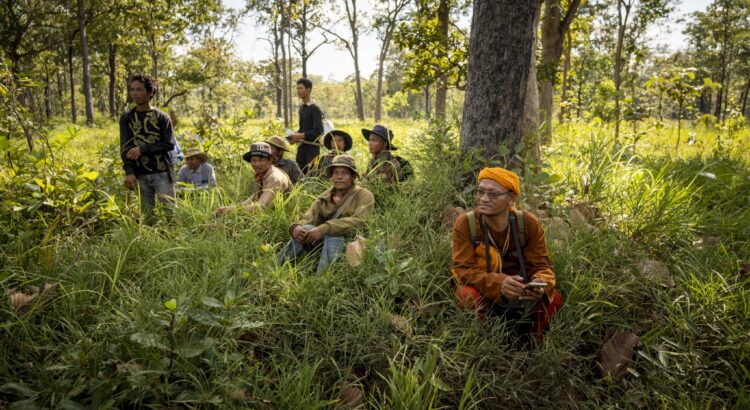
A new report under the more4nature project finds community-based monitoring (CBM) is reshaping environmental governance in Cambodia, Myanmar, Lebanon, Tanzania and Kenya by enabling communities to generate credible, actionable environmental data and use it to influence decision-making from village councils to global frameworks like the Kunming–Montreal Global Biodiversity Framework and IUCN Resolution 126.
The report shows digital tools—locally designed apps with offline capability and simple interfaces—help communities collect georeferenced photographic evidence, strengthen local organisation, and boost visibility for women and youth. Case studies include Cambodia’s Prey Lang Network, where georeferenced evidence increased credibility despite shrinking civic space; Lebanon’s Green Rangers, whose app-and-hotline model channels validated violations to enforcement authorities; Myanmar’s KERBWA app , co-designed to protect Indigenous data sovereignty amid conflict; Tanzania’s CoFOMA mangrove monitoring linking conservation to livelihoods; and Kenya’s emerging Mikoko Yetu framework aiming to standardise community mangrove monitoring.
The report stresses that data alone is insufficient: impact depends on governance context, safety, data-governance protocols, and sustained funding and capacity. Priorities identified include anonymity and protection, community-led data governance, validation protocols, feedback loops, gender and youth inclusion, and pathways for integrating community evidence into national reporting. Danmission is urged to scale CBM through a cross-country framework, policy briefs aligning CBM with global commitments, and support for institutional recognition of community-generated data.
The Report is written by a team from University of Copenhagen, Forests and Peoples Organization, and Danish NGO Danmission while Finn Danielsen from NORDECO has written the foreword to the report.