The event Community-Based Environmental Monitoring in the Arctic: from guidelines to practice introduced the newly published Guidelines for Community-Based Environmental Monitoring in the Arctic, which offer a structured approach to bridging local and scientific knowledge in environmental monitoring for sustainable use of natural resources across the Arctic. The session was designed to support dialogue across sectors, disciplines and regions, with particular relevance for researchers, local community stakeholders, concerned citizens, policymakers, government resource managers, practitioners and NGOs working in Arctic environmental monitoring and governance.
The session focused on examples from the Faroe Islands and the Umhvørvisstovan or Environment Agency mentioned how limited agency resources mean many specific regulations are still needed; environmental impact assessments (EIAs) are required for green energy projects but not generally for infrastructure. Two major Faroese cases reveal gaps in community consultation: a proposed 30 MW Sandoy wind farm was postponed by the Nature Conservation Board for extended birdstudies after local protest, and plans for a subsea tunnel linking Sandoy, Skúvoy and Suðuroy raise social and environmental concerns given the project’s scale and protected-area context.
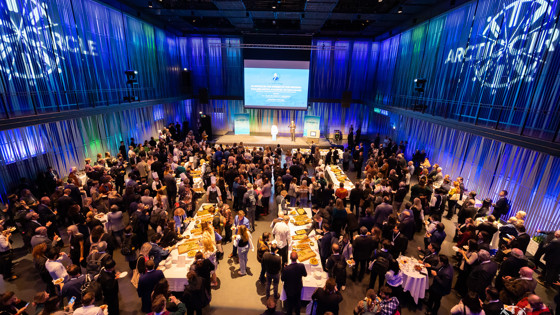
The session used a World Café format where participants after the presentations discussed support structures for community-based environmental monitoring, citizens engagement, links to government, impact, and long-term sustainability. Some of the main points raised for the local level included:
- Lower barriers to reporting: simple, accessible reporting channels; local coordination; gentle standardization; quality control by coordinators.
- Templates & formats: co‑develop standardized report templates (including uncertainty measures) and a common platform showing local and regional data.
- Make participation attractive: show clear local benefits, use simple metrics (e.g., number hunted fledglings of fulmar), incentives, recognition, and facilitate local data use in decisions.
- Accessibility & inclusion: accommodate elders and non‑readers (oral reports, community meetings, simple visuals); hold small village meetings to present and discuss findings.
- Two‑way information flow: ensure data and analysis are returned to communities and also shared between communities to build trust and engagement.
- Transparency & trust: transparent processes and clear safeguards so locals don’t fear data will be used against them.
- Immediate outcomes: short‑ and long‑term feedback loops; local databases for hunted birds, fulmar chick metrics, litter etc.
Institutional level: main points
- Institutional bridgebuilding: formally connect communities, researchers, and authorities (e.g. environmental protection agency, research institutes, Ramsar Site Committees, academia, local government, local citizen representatives).
- Role of academia: act as broker/technical contact point; provide training, methodology, and link local monitoring to formal institutions.
- Capacity & training: train local monitors; support local coordinators; build sustainable local skills beyond one‑off school projects.
- Governance & platforms: institutions should provide/host the common platform, data standards, and quality‑control procedures.
- Decision‑making integration: ensure community data are visible and usable in policy processes (for example for EIAs and spatial planning).
- Coordination & representation: define who sits at the table (decision‑makers, researchers, community representatives, NGOs) and start with general principles before tailoring methods to resource/area specifics.
- Trust & feedback: institutional commitments to use and return information; short to long term feedback mechanisms.
The well-attended session was organized by resource persons and facilitators from the Faroe Umhvørvisstovan/Environment Agency, Jagtforeningen Lonin, University of the Faroe Islands, Aarhus University, and NORDECO.